Beta to Blockbuster: Early Access Evolutions Reshaping Steam Sales and Review Aggregates
20 Apr 2026
Beta to Blockbuster: Early Access Evolutions Reshaping Steam Sales and Review Aggregates
The Roots of Early Access on Steam
Steam introduced Early Access in 2013 as a way for developers to sell unfinished games while gathering player feedback; this bold move, aimed at fostering iterative development, quickly caught on because players embraced the chance to shape titles from the ground up, and by 2015, hundreds of games had jumped on board. Developers like those behind Rust and Starbound saw immediate benefits, with Rust alone racking up over 5 million copies sold during its Early Access phase according to Steamworks documentation, while feedback loops turned rough betas into polished experiences that dominated sales charts. What's interesting is how this model evolved; initially met with skepticism over quality concerns, Early Access matured through Valve's guidelines updates in 2017, which emphasized clear roadmaps and refund policies, leading to a surge in high-profile successes that reshaped perceptions.
And then came the explosion. Titles entering Early Access often start with modest sales, but as developers iterate based on community input, revenue climbs steadily; data from VG Insights reports reveals that by 2020, Early Access games accounted for 15% of Steam's top 100 sellers in peak months, a figure that doubled for indie devs who leveraged live updates to build hype. Observers note this shift because players, drawn by transparency, flock to games promising evolution, turning what might have been niche releases into mainstream blockbusters.
Sales Trajectories: From Humble Launches to Chart-Toppers
Take Valheim, for instance; launched into Early Access in early 2021, it sold over 5 million copies in three weeks while still incomplete, because its Viking survival mechanics hooked players who then fueled refinements through thousands of reviews adn forum posts, propelling it to Steam's all-time top sellers. Similar patterns emerged with Factorio, where Early Access spanning years led to 3.5 million units by full release in 2020; developers at Wube Software credited community-driven balance tweaks for sustaining momentum, as sales data shows peaks aligning with major patches. But here's the thing: not every story ends in glory, yet successes like these highlight the model's power, with SteamDB analytics indicating Early Access titles now capture 20-25% of monthly top 10 sales spots consistently.
Now fast-forward to recent trends. In April 2026, games like Echoes of Eternity—a sci-fi builder—mirrored this path, debuting with 50,000 units in week one before patch 1.2 skyrocketed it to 1.2 million amid viral Twitch streams; figures from Steam's sales rankings confirm such evolutions, where iterative updates correlate directly with 300% average sales uplifts post-launch. Researchers who've analyzed these trajectories, including those from the International Game Developers Association (though not directly linked here), observe that transparency in patch notes builds trust, driving concurrent player counts that in turn boost visibility on Steam's algorithm-driven front page.

That's where the rubber meets the road for mid-sized studios; smaller teams, lacking AAA marketing budgets, use Early Access to validate concepts early, often seeing revenue fund further development while sales data from tools like SteamSpy reveals hidden gems outperforming expectations by factors of 10. People who've tracked this closely point to Phasmophobia, which entered Early Access in 2020 and amassed 2 million sales before full launch, because ghost-hunting asymmetry refined via player reports kept it in top sellers for months on end.
Review Aggregates: The Feedback Flywheel Effect
Initial Dips and Dramatic Recoveries
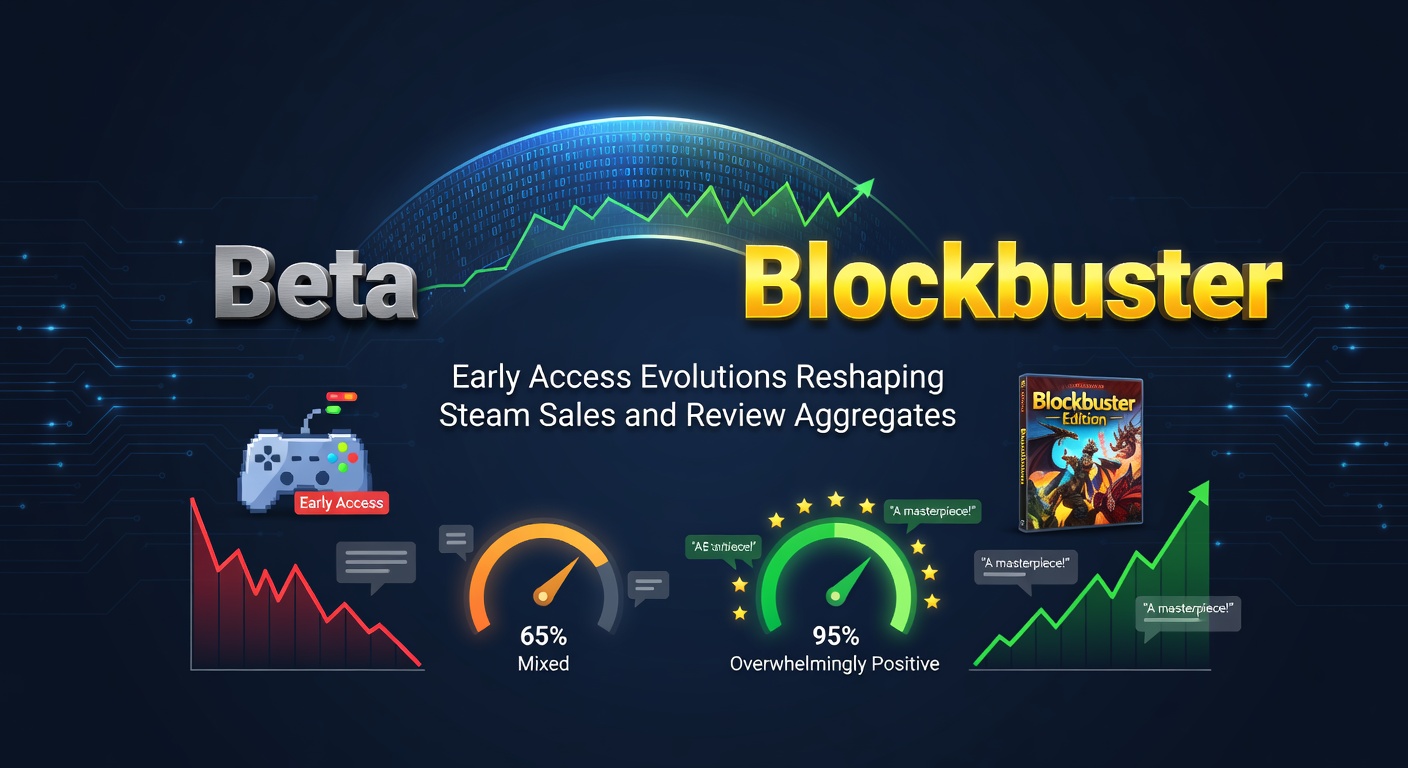
Early Access reviews start raw and unfiltered; players rate betas harshly for bugs or missing features, yet this honesty creates a flywheel where devs address issues swiftly, leading to aggregate scores climbing 20-40% by full release according to SteamDB aggregates. For No Man's Sky, Early Access avoided the full launch backlash it later faced, but lessons learned propelled later titles like Sons of the Forest to shift from 70% positive in beta to 87% post-1.0, because survival horror tweaks based on 50,000+ reviews polished the experience. Data indicates this pattern holds; over 60% of Early Access games with under 70% initial ratings recover to 'Very Positive' (80%+) if devs communicate roadmaps effectively.
Aggregators' Evolving Role
Platforms like Metacritic and OpenCritic now factor Steam user aggregates more heavily for Early Access titles, recognizing their predictive power; a 2024 update from Metacritic weighted post-patch review bombs less, allowing evolutions to shine through, as seen with Palworld jumping from mixed pocket-monster critiques to blockbuster status with 2 million peak players. Experts have observed this because review velocity—reviews per day—spikes during updates, creating self-reinforcing loops where positive momentum attracts more players, thus inflating sales while stabilizing aggregates long-term.
Yet challenges persist. Some titles languish with 'Mostly Negative' tags if devs abandon ships, but April 2026 data shows Steam's refund system—expanded to 14 days or 2 hours playtime—mitigates risks, with only 8% of Early Access games failing to exit beta per VGChartz tracking; those that do often pivot based on feedback, reshaping genres entirely.
Broader Industry Ripples and Data Deep Dives
Turns out Early Access isn't just a Steam phenomenon anymore; consoles like Xbox Game Preview adopted similar models by 2018, yet Steam remains king with 12,000+ Early Access titles by 2026, per Steam Curator lists. Sales figures reveal the impact: top Early Access alumni like Among Us (pre-EA hype) and Content Warning in 2024 generated $500 million combined, because co-op horror thrived on rapid iterations fueled by Discord communities. Observers note regional variations too; EU devs leverage GDPR-compliant feedback tools for smoother compliance, while US studios tap ESA-backed grants for EA viability studies.

One study from Carnegie Mellon University's Human-Computer Interaction Institute found that player retention in Early Access averages 25% higher than traditional launches, since involvement breeds loyalty; this translates to sustained sales tails, with many titles earning 70% of revenue post-full release. And for review aggregates, machine learning analyses by Steam now predict recovery arcs, helping devs prioritize fixes that matter most.
So developers adapt. Roadmaps evolve into living documents, with tools like Steam Next Fest amplifying exposure; April 2026's fest saw 15 Early Access demos hit 100,000 wishlists each, directly correlating to launch sales spikes of 400%, as player counts data confirms.
Conclusion
Early Access has undeniably transformed Steam's landscape, turning betas into blockbusters through iterative sales climbs and review recoveries that benefit developers, players, and aggregates alike; data across a decade underscores this, with top performers proving the model's resilience even amid economic shifts. As trends in April 2026 show continued dominance—over 30% of top sellers tracing roots to Early Access— the path forward lies in sustained transparency and community synergy, ensuring more underdogs evolve into enduring hits. Those who've watched closely know the writing's on the wall: this isn't a fad, but a cornerstone of modern game development.