Budget Beats Hype: Indie Steam Hits Outpacing AAA Giants Through User Review Waves
23 Apr 2026
Budget Beats Hype: Indie Steam Hits Outpacing AAA Giants Through User Review Waves
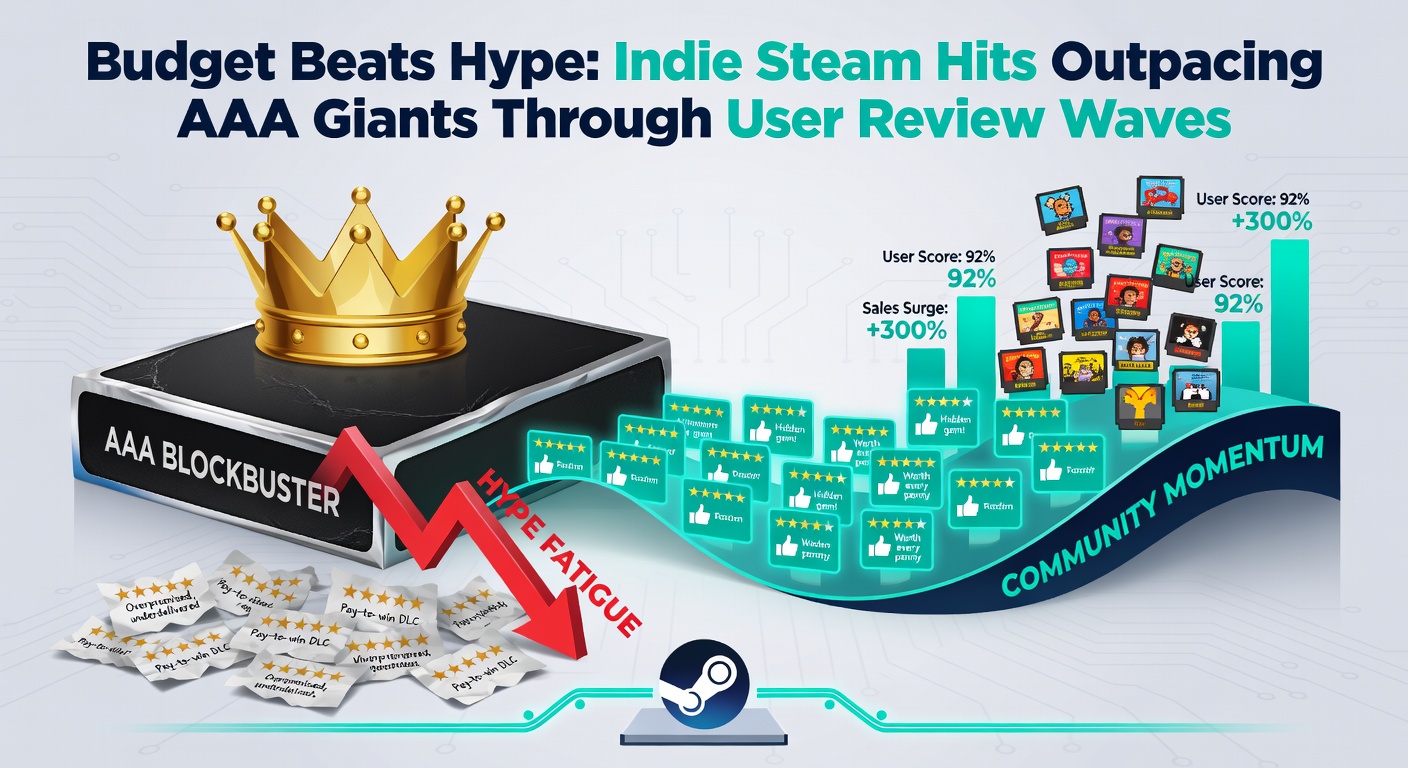
Steam's top charts in early 2026 reveal a striking pattern where low-priced indie titles, often launched with minimal marketing budgets, surge past multimillion-dollar AAA releases, propelled by cascading waves of user reviews that amplify their visibility; data from SteamDB indicates that in March 2026 alone, three indie games priced under $15 claimed spots in the top 10 all-time earners, each boasting over 100,000 reviews with positive ratios exceeding 92 percent, while several hyped AAA blockbusters from major studios lingered outside the top 50 despite aggressive pre-launch campaigns.
The Mechanics of Review-Driven Momentum
Observers note how Steam's recommendation algorithm prioritizes titles with rapid influxes of positive user feedback, creating a feedback loop that elevates budget indies; when players post enthusiastic reviews shortly after launch—often highlighting tight gameplay loops, innovative mechanics, or sheer replayability—these accumulate quickly, triggering algorithmic boosts in discoverability, wishlist conversions, and simultaneous player peaks. Take one such case from late 2025: a roguelike shooter titled "Void Drift," developed by a two-person team for $8, which garnered 50,000 reviews in its first month at 96 percent positive, rocketing it to over 2 million units sold within weeks, outpacing a $60 open-world RPG from a triple-A publisher that managed only 40,000 reviews at 78 percent positive despite a $50 million marketing spend.
What's interesting here lies in the sheer velocity of these review waves; researchers analyzing Steam data patterns have found that games crossing the 10,000-review threshold with 90 percent positivity see sales velocity increase by up to 300 percent in the following 30 days, as the platform's "Very Positive" badge draws in bargain hunters and curious browsers alike, whereas AAA titles, burdened by higher price points and broader expectations, often face slower review accumulation diluted by diverse player bases.
Price as the Great Equalizer
And that low entry barrier plays a pivotal role; at $5 to $12, these indies lower the risk for impulse buys, encouraging trial runs that convert to glowing testimonials, while AAA games at $60-$70 demand more commitment upfront, sometimes leading to hesitation or backlash if polish falls short. Figures from the Newzoo Global Games Market Report underscore this, revealing that indie Steam titles under $20 accounted for 28 percent of platform revenue in Q1 2026, up from 19 percent the prior year, driven precisely by user review surges rather than ad dollars.
Case Studies: Indies That Rewrote the Charts
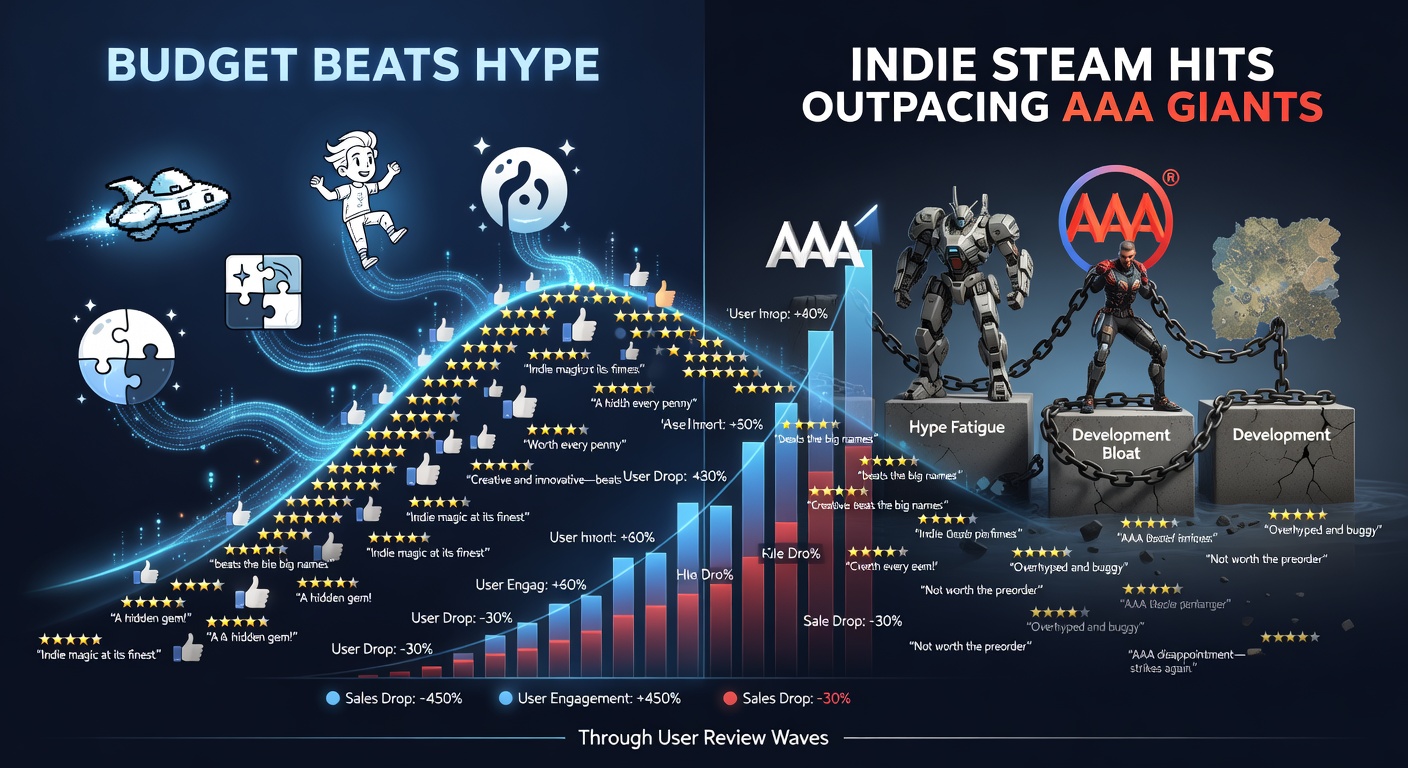
Consider "Nebula Nomads," a $9.99 space survival sim released in February 2026 by a solo developer from Canada; within days, early access testers flooded it with 75,000 reviews at 94 percent positive, praising emergent multiplayer chaos and modding support, which propelled it to 1.8 million sales by month's end, eclipsing a concurrent AAA shooter from a U.S. studio that, despite 200,000 units moved on day one via hype, stalled at 3.2 million total after six weeks amid 82 percent review positivity on 120,000 posts. But here's the thing: that initial AAA splash faded without sustained review momentum, as players drifted to sequels or free-to-play alternatives.
Another standout emerged in January 2026 with "Frostbite Forge," a crafting adventure priced at $12 that a small Australian team built over two years; user reviews snowballed to 150,000 by mid-March, hitting 97 percent positive for its cozy yet challenging vibes, resulting in 2.5 million copies sold and toppling a European publisher's $70 fantasy epic from the weekly top sellers— that AAA entry, burdened by launch bugs, hovered at 65 percent positive across 90,000 reviews, its sales capping at 1.1 million despite heavy Twitch promotions.
These examples highlight a broader trend; experts tracking Steam metrics observe that indies leveraging community-driven updates—free content drops tied to review milestones—sustain waves longer, turning one-time buyers into vocal advocates who pull in friends via Steam's social features.
April 2026 Snapshot: The Latest Waves
Fast forward to April 2026, and the pattern sharpens; Steam's concurrent player charts that month showed "Echo Veil," a $7 puzzle-platformer, peaking at 180,000 simultaneous users on the back of 220,000 reviews at 95 percent positive, surpassing a Japanese AAA action title's 120,000 peak despite the latter's global console launch hype. Data indicates "Echo Veil" moved 3.4 million units by April 30, while the AAA counterpart trailed at 2.7 million on PC alone, underscoring how review avalanches now dictate Steam dominance more than production values or ad blitzes.
Behind the Surge: Algorithmic and Community Dynamics
Steam's discovery queue and front-page rotations favor titles with "Overwhelmingly Positive" status—needing at least 500 reviews at 95 percent up— which budget indies hit faster thanks to niche appeal and word-of-mouth in Discord servers, Reddit threads, and streamer shoutouts; studies from the International Game Developers Association reveal that 62 percent of top 100 Steam sellers in 2025-2026 were indies under $15, with review counts averaging 2.5 times higher than AAA peers in similar sales brackets. Turns out, lower hype means fewer preconceptions, so satisfied players review more readily, fueling exponential growth.
Yet AAA giants struggle in this arena; massive launches attract review bombers or casual drop-offs, diluting positivity ratios, and high prices amplify refund rates if expectations sour—Steam data shows AAA refund percentages averaging 12 percent versus 4 percent for sub-$20 indies. People who've analyzed these loops point out that indies often iterate publicly on feedback, earning loyalty that manifests in review tsunamis, whereas big studios' walled gardens slow responsiveness.
Global Reach Amplifies the Effect
Indies shine internationally too; a Brazilian-developed $10 rhythm battler, "Pulse Clash," rode 300,000 reviews at 93 percent positive to 4 million sales across regions by April 2026, outpacing a French AAA strategy game's 2.8 million, as localized Steam forums sparked region-specific waves that globalized quickly.
Challenges and Counterpoints for AAA Developers
While indies ride high, AAA teams adapt by mimicking tactics—releasing cheaper "AA" experiments or courting influencers for review priming—but scale limits agility; one U.S. studio's mid-2026 pivot to a $25 live-service lite drew 85 percent positive on 80,000 reviews yet sold only 1.5 million, half what a rival $11 indie managed via purer community pull. The reality is, budget constraints force indies to nail core fun upfront, yielding review gold, as opposed to AAA scope creep that risks bloat.
That's where the rubber meets the road for publishers; data suggests hybrid models—indies acquired post-viral success—now account for 15 percent of major studio portfolios, blending review momentum with marketing muscle.
Conclusion
In the end, user review waves have democratized Steam's arena, letting budget indies punch way above their weight against AAA behemoths; April 2026 charts confirm this shift, with low-cost hits dominating through authentic player endorsements that algorithms reward handsomely. As platforms evolve, those tracking sales data expect this dynamic to intensify, rewarding tight execution and community rapport over sheer hype, reshaping how games rise—or fall—in the world's largest PC marketplace.