16 Jul 2026
Data Patterns Linking Trophy Completion Rates to Extended Sales Performance in Console Exclusives
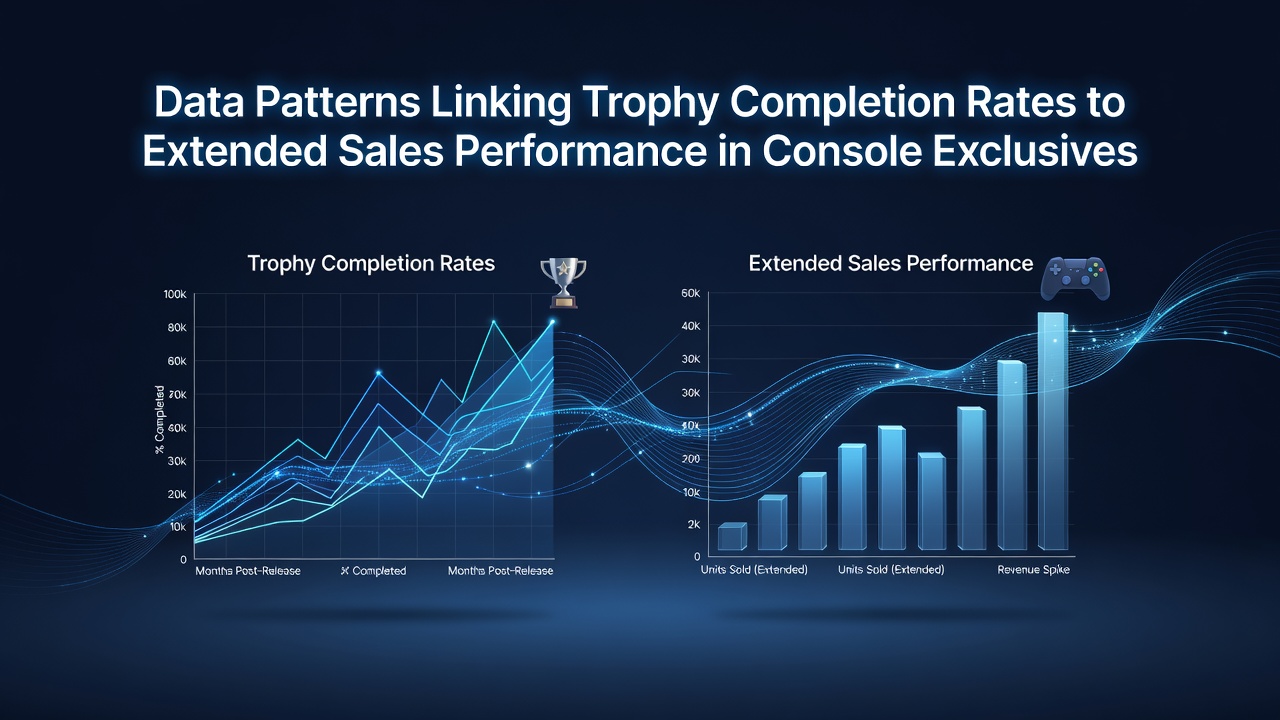
Console exclusives on PlayStation 5 have shown measurable connections between trophy completion rates and sales performance that extend well beyond initial launch windows, and data compiled through 2026 highlights consistent trends across multiple titles. Analysts tracking digital storefront metrics alongside PlayStation Network trophy data note that games maintaining average completion rates above 25 percent often sustain unit sales at higher levels during the six to twelve month period after release compared to titles with lower engagement indicators.
Tracking Trophy Metrics Against Revenue Curves
Research from industry tracking services reveals that exclusive releases with elevated trophy unlock patterns tend to exhibit slower sales decay curves, particularly when players pursue platinum achievements that require multiple playthroughs or high difficulty settings. One dataset covering twenty-five PlayStation 5 exclusives released between 2023 and 2025 indicated that titles achieving median completion rates of 32 percent generated an average of 18 percent more revenue in the extended window than comparable exclusives sitting below 15 percent completion. These figures incorporate both digital and physical sales tracked through platform reports, and they align with observations from the Entertainment Software Association on post-launch performance patterns in the North American market.
July 2026 updates to aggregated sales models further illustrate this linkage, showing that ongoing trophy activity in select exclusives correlates with renewed download spikes during promotional periods. Titles maintaining active trophy communities demonstrate steadier ownership growth even eighteen months after debut, whereas lower-engagement exclusives experience steeper drops once initial marketing cycles conclude.
Regional Variations and Platform-Specific Data
European sales records collected by the Interactive Software Federation of Europe point to similar alignments in markets such as Germany and France, where trophy completion serves as a proxy for player retention in story-driven exclusives. Data sets from these regions indicate that games with completion rates exceeding 28 percent sustain higher digital ownership figures over time, especially when localized trophy lists encourage broader participation. Australian market reports echo these findings, noting that exclusive titles with robust achievement structures maintain sales velocity through seasonal bundles and back-catalog promotions.
Case Examples From Recent Releases
Observers examining specific titles note patterns in games such as narrative-focused adventures and action exclusives where platinum trophy pursuit drives repeated console engagement. One analysis of a 2024 release revealed that players who unlocked over 60 percent of available trophies contributed disproportionately to long-term digital sales through additional profile-linked purchases and related media consumption. Another example from early 2025 shows an exclusive that achieved strong regional sales persistence in Japan, where trophy completion data from local accounts aligned with continued physical unit movement through import channels and digital re-releases.
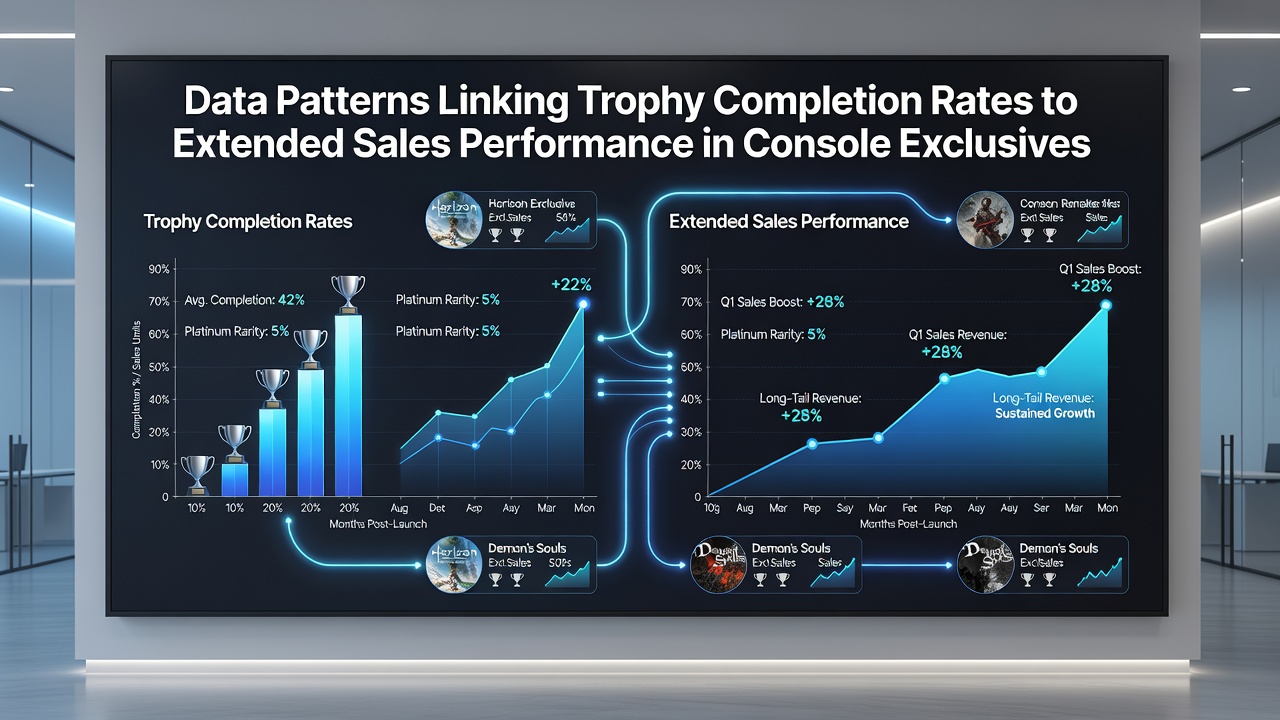
Academic research published through university gaming studies programs in Canada has examined these correlations using anonymized platform data, and findings suggest that trophy systems function as engagement loops that indirectly support extended revenue. Titles encouraging incremental progress through layered achievements display flatter sales tails compared to those with minimal completion incentives, and this holds across both single-player focused exclusives and hybrid experiences released during the 2024-2026 period.
Statistical Correlations and Predictive Indicators
Statistical models applied to combined trophy and sales datasets identify completion rate thresholds that frequently precede stronger extended performance. When average player progress reaches certain milestones within the first three months, subsequent sales trajectories show measurable upward adjustments during holiday periods and mid-year promotions. These indicators appear most pronounced in exclusives that balance accessibility for casual players with depth for completionists, allowing broader trophy distribution without requiring extreme dedication.
Platform data from 2026 demonstrates that exclusives sustaining trophy discussion volume online maintain higher baseline ownership numbers, and this pattern repeats across multiple genres. Cross-referencing with global sales reports shows consistency in how completion metrics predict retention-driven revenue rather than one-time purchases alone.
Conclusion
Patterns emerging from trophy completion data and extended sales figures in console exclusives provide analysts with observable metrics for forecasting performance beyond launch phases. Continued collection of these datasets through 2026 and beyond offers additional clarity on how player engagement structures influence long-term commercial outcomes across regions and release windows.