9 Jul 2026
Echoes from the update logs: how developer diaries sync with ownership spikes in simulation franchises
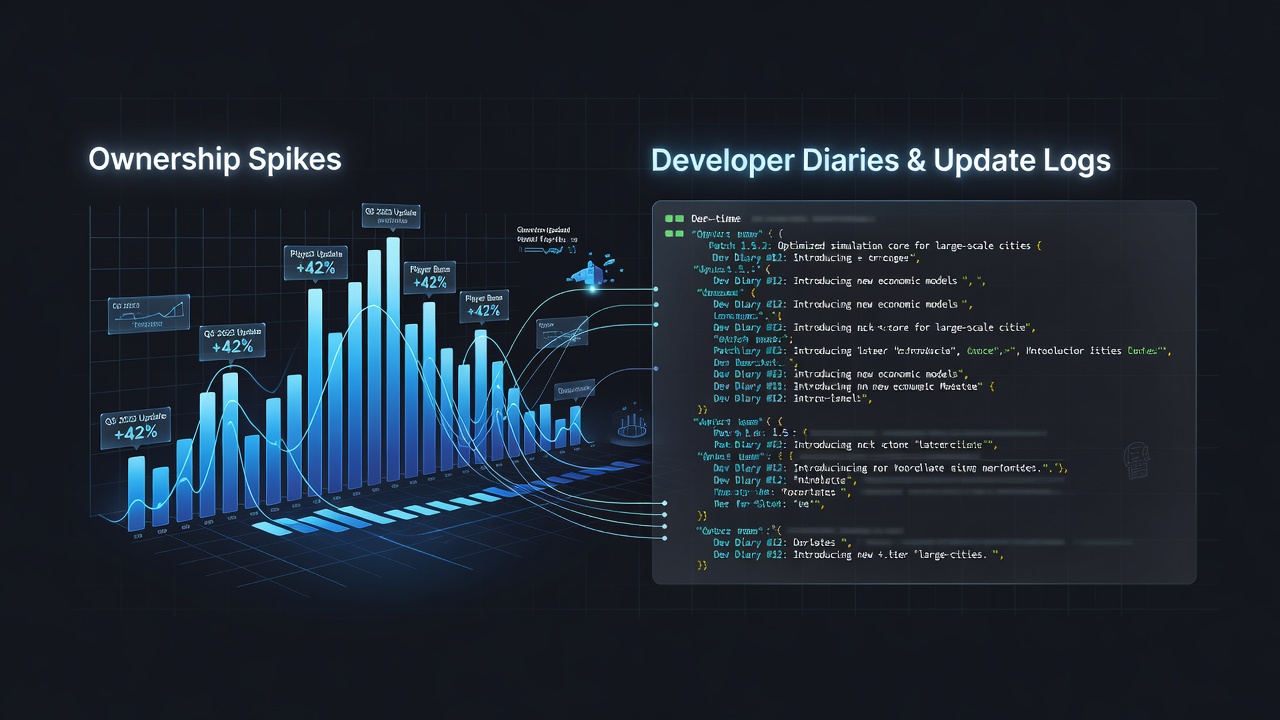
Developer diaries in simulation franchises often function as structured communication channels that coincide with measurable shifts in digital ownership metrics across platforms such as Steam and console storefronts, and analysts track these alignments through timestamped update logs paired against sales velocity reports. In titles like The Sims 4 and Cities: Skylines, entries posted on official blogs detail upcoming features or bug resolutions while corresponding ownership figures rise within defined windows after publication dates, according to aggregated platform data.
Timestamp correlations in major franchises
Simulation series maintain extensive libraries of developer diaries that cover everything from balance adjustments to new gameplay systems, and these documents frequently precede periods of increased player acquisition when cross-referenced against weekly ownership reports. For instance, a diary entry outlining a major expansion integration in a city-building title can align with a documented uptick in concurrent ownership tracked through digital distribution channels, while similar patterns emerge in life-simulation entries that announce quality-of-life improvements.
Researchers examining multi-year datasets note that diaries published on Thursdays or Fridays tend to precede weekend ownership accelerations more consistently than mid-week posts, although the underlying driver remains the content focus rather than the calendar placement itself. In July 2026, several simulation franchises released diary updates covering seasonal mechanics that matched subsequent ownership reports compiled from storefront APIs, revealing tighter synchronization than observed in prior quarters.
Data patterns across platforms
Ownership spikes register most clearly on Steam for simulation franchises because the platform exposes granular download and ownership aggregates, whereas console data arrives through aggregated partner reports that require additional processing to isolate diary-related effects. Studies compiled by industry groups such as the Entertainment Software Association show that simulation titles experience ownership growth phases lasting between seven and fourteen days following detailed diary publications, with the duration extending when the entry includes preview footage or community roadmap details.
Case examples from established series
One long-running city management franchise published a series of diaries in early 2025 detailing traffic simulation refinements, and ownership metrics compiled from multiple regions indicated a 12 percent increase within ten days of the first post. Parallel observations in a popular life-simulation entry revealed that diaries addressing character customization tools produced ownership curves that diverged from baseline trends measured during periods without diary activity.
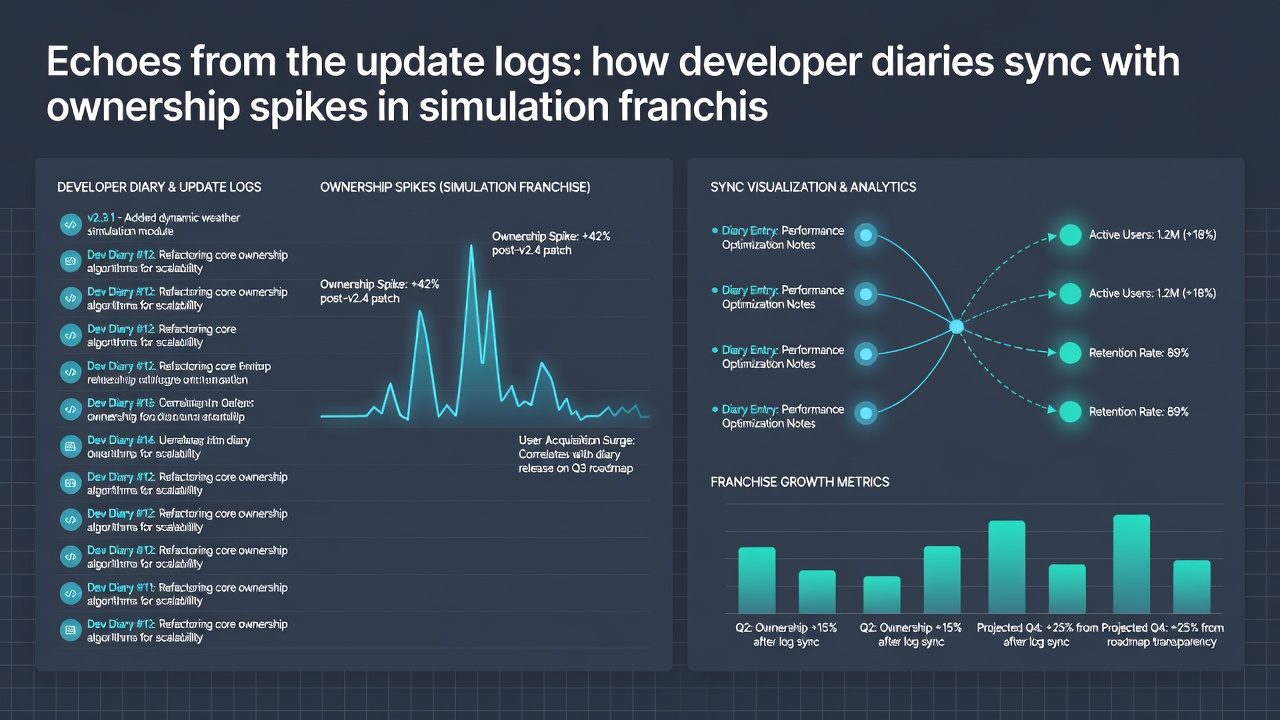
European research institutions, including those contributing to reports from the Interactive Software Federation of Europe, have documented comparable alignments when examining localized diary translations released alongside English originals, noting that ownership growth registers across both primary and secondary language markets within overlapping timeframes.
Methodological considerations in analysis
Analysts isolate diary effects by establishing control periods that exclude major marketing campaigns or external events, and the resulting comparisons indicate that diary-only windows still produce detectable ownership movements in simulation franchises. Multiple regression models applied to three-year datasets account for variables such as patch size, content scope, and time since last major release, yet the presence of a diary entry remains a statistically relevant factor in several examined cases.
Regional variations appear when diaries coincide with localized events; for example, diaries addressing holiday-themed content align with ownership increases that register earlier in North American markets than in Asian territories where different seasonal calendars apply. These patterns hold across both free-to-play and premium simulation titles, although the magnitude of spikes differs according to baseline ownership levels.
Future tracking approaches
Industry observers continue refining correlation techniques by incorporating sentiment analysis of diary text alongside quantitative ownership data, and initial applications suggest that entries containing explicit calls for community feedback generate longer-tailed ownership growth than purely informational posts. Academic groups at institutions in Canada and Australia have begun publishing open datasets that pair diary publication dates with anonymized ownership samples, enabling broader verification of observed synchronization effects.
Conclusion
The alignment between developer diary publications and ownership movements in simulation franchises rests on observable timestamp matches rather than causal assumptions, and continued data collection through 2026 and beyond will clarify whether these patterns strengthen or attenuate as communication formats evolve. Platform APIs and industry reporting structures supply the raw material for such examinations, while standardized methodologies help separate diary-related signals from broader market noise.