28 May 2026
How Patch Frequencies Align with Regional Revenue Patterns in Multiplayer Titles
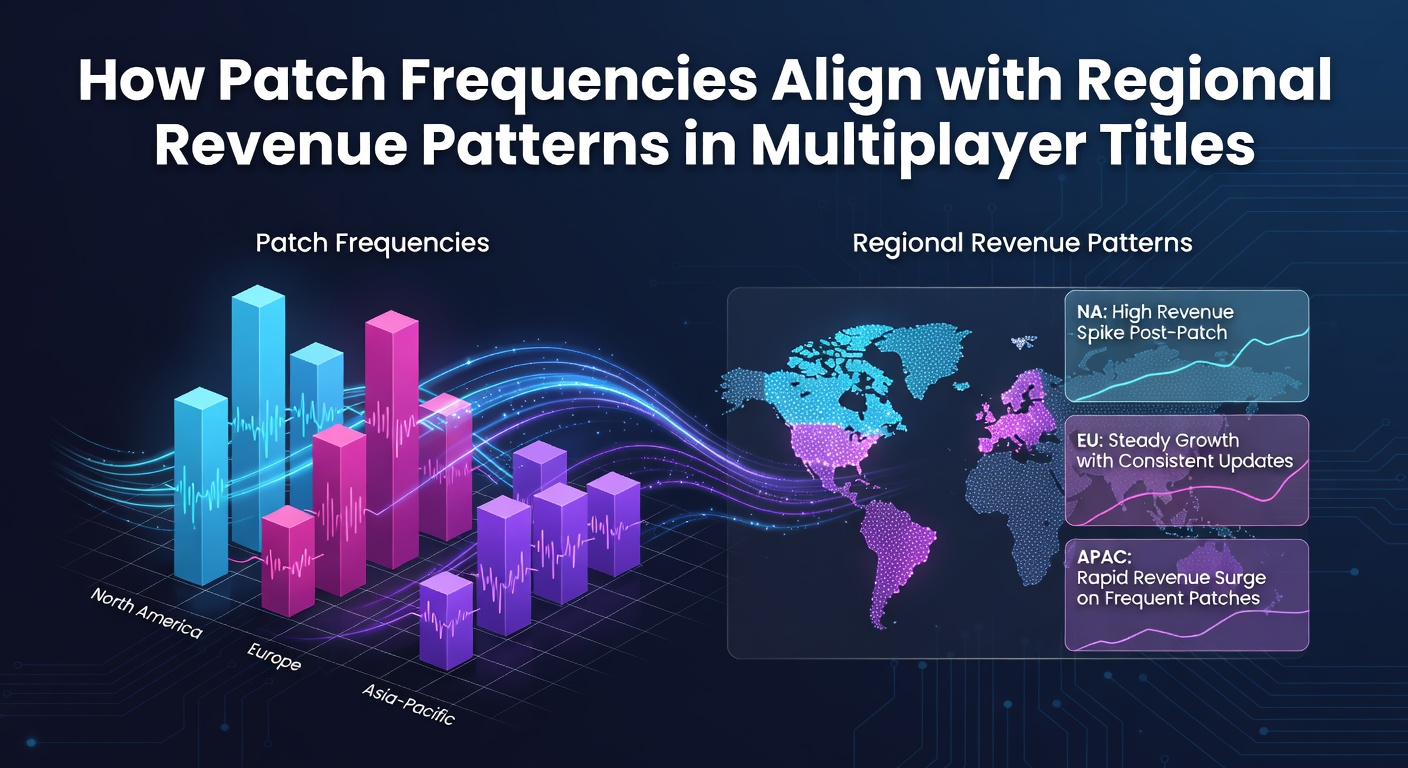
Multiplayer titles operate in environments where developers release patches at varying intervals, and those intervals often correspond with distinct revenue behaviors across different geographic markets. Data compiled through 2026 indicates that North American player bases respond to weekly or bi-weekly patches with measurable spending increases on in-game items, while European markets show steadier but smaller revenue lifts tied to monthly update cycles. In contrast, Asia-Pacific regions frequently demonstrate revenue peaks when patches arrive every two to three weeks, aligning with seasonal events and local holidays.
Developers track these patterns through telemetry systems that log both update deployments and regional transaction volumes. Observers note that games such as those in the battle royale and MOBA genres provide clear illustrations of this alignment, because their live-service models depend on continuous content delivery to sustain player engagement and monetization streams.
Patch Cadence and Market-Specific Revenue Responses
Analyses of titles released between 2024 and 2026 reveal consistent regional divergences. In the United States and Canada, frequent patches correlate with rapid spikes in microtransaction purchases during the first 48 hours after deployment, according to aggregated platform data. European markets, however, tend to generate steadier revenue across the full patch cycle, with less pronounced immediate surges but higher sustained spending over subsequent weeks. Australian and New Zealand data collected by industry groups shows patterns closer to North American responses, though overall volumes remain lower due to smaller population bases.
What's interesting is how developers adjust internal schedules based on these observations. Teams often prioritize hotfixes for critical bugs in high-revenue regions first, then roll out broader content patches that target engagement metrics in secondary markets. This sequencing produces measurable differences in daily active user counts and average revenue per user across territories.
Evidence from 2026 Release Cycles
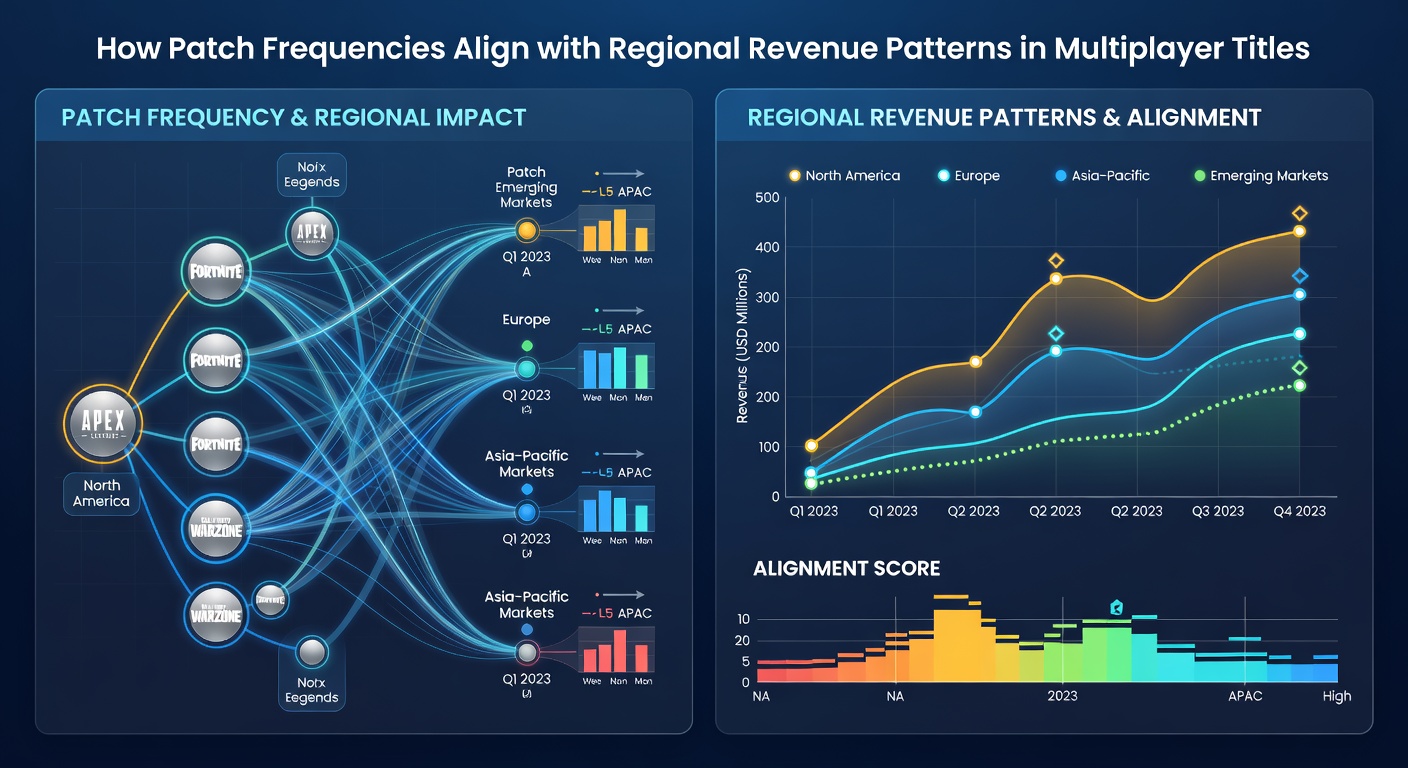
By May 2026, several major multiplayer releases had logged patch histories alongside revenue reports that highlight these alignments. Titles maintaining bi-weekly update rhythms recorded above-average revenue retention in North American and Australian markets compared with those following monthly schedules. European data collected during the same period indicated stronger performance when patches incorporated localized events, such as regional esports tie-ins, rather than purely global content drops.
Researchers from institutions including the University of Melbourne have examined these datasets and identified correlations between patch frequency and regional spending elasticity. Their findings show that markets with higher mobile penetration, such as parts of Southeast Asia, reward shorter patch intervals with increased battle pass and cosmetic sales, whereas console-dominant regions exhibit flatter responses to rapid updates.
Retention Metrics and Spending Behaviors
Player retention serves as the intermediary variable linking patch frequency to revenue outcomes. Data indicates that North American users who receive new content weekly maintain login streaks at higher rates, which in turn drives repeated exposure to monetization systems. European cohorts, by comparison, sustain engagement through monthly patches that deliver larger feature sets, producing consistent but less volatile revenue curves.
But here's the thing: misalignment occurs when developers apply uniform global patch schedules without regional calibration. Several titles in 2025 and early 2026 experienced revenue plateaus in specific territories after implementing patch cadences that did not match local spending rhythms. Adjustments made mid-cycle, such as increasing update frequency in underperforming regions, produced recovery in transaction volumes within four to six weeks according to platform telemetry.
Developer Strategies and Cross-Regional Coordination
Studios coordinate patch pipelines through centralized teams that receive input from regional analysts. This approach allows simultaneous deployment of core fixes while staggering optional content based on market priorities. Evidence from industry reports prepared by groups such as the Entertainment Software Association demonstrates that titles employing this hybrid model achieved more balanced revenue distribution across territories by mid-2026.
Additional studies conducted through European research networks have examined similar coordination challenges, noting that regulatory differences in data collection practices can influence how precisely patch-revenue correlations are measured in each jurisdiction. Despite these variations, the underlying pattern persists: patch frequency functions as one controllable variable among several that shape regional financial performance in live multiplayer environments.
Conclusion
Patch frequencies in multiplayer titles demonstrate measurable alignment with revenue patterns that differ by region. North American and Australian markets tend to reward shorter intervals with immediate spending increases, European territories show steadier returns from monthly cycles, and Asia-Pacific regions often respond best to intermediate schedules tied to local events. Developers who calibrate update rhythms according to these documented regional behaviors record more consistent revenue retention across their player bases through 2026 and beyond.