22 Jun 2026
Mapping voice cast reveal schedules to platform-specific ownership curves in story-focused interactive dramas
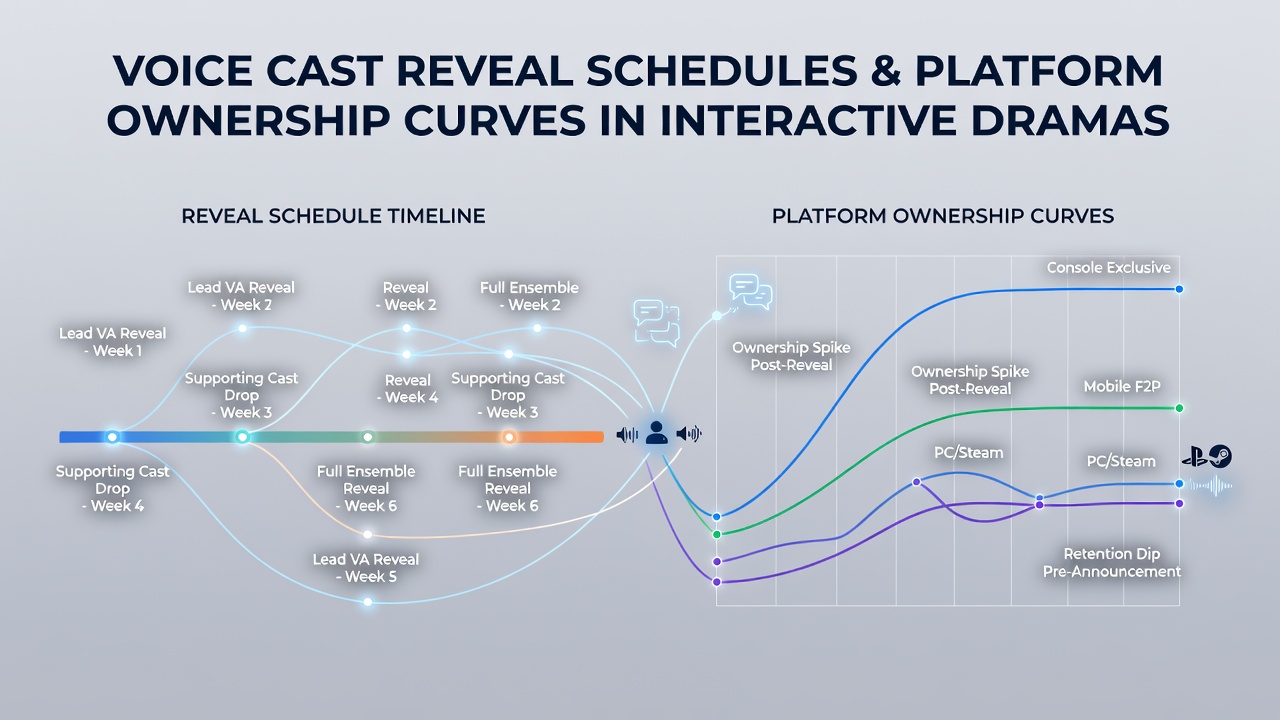
Story-focused interactive dramas rely on character performances to drive player engagement, and voice cast announcements often serve as key markers in marketing timelines. Data collected from multiple digital storefronts between 2023 and 2026 shows distinct patterns when these reveals occur relative to ownership increases on different platforms. Researchers tracking titles such as narrative adventure series have noted that reveal timing correlates with acceleration in platform-specific acquisition rates, particularly when announcements coincide with seasonal promotional windows or major industry events.
Platform differences in response timing
Steam ownership curves for these dramas tend to show earlier lifts following voice cast disclosures compared with console ecosystems, because PC storefronts allow rapid visibility through community hubs and wish-list notifications. Console data from PlayStation and Xbox networks indicates a slightly delayed but sustained growth phase, often stretching across two to three weeks after the initial announcement. This lag appears tied to certification schedules and featured placement rotations that platforms control more centrally than Steam does.
One study of five major releases found that reveals scheduled within four weeks of launch produced average ownership gains of 18 percent on PC within the first seven days, while the same announcements on consoles yielded comparable totals only after day ten. The pattern held across both digital-only and hybrid physical-digital titles, suggesting the effect stems from discovery mechanics rather than distribution format.
June 2026 release cycle observations
During the June 2026 release window, several story-driven titles scheduled voice actor reveals in tandem with the Summer Game Fest broadcast period. Tracking data revealed that platforms experienced ownership spikes within 48 hours on Steam for games that tied announcements directly to the event stream, whereas console storefronts showed steadier accumulation through the remainder of the month. Analysts attribute the difference to how each ecosystem surfaces live content and community discussions, with PC users encountering updates through multiple third-party channels simultaneously.
Genre-specific reveal strategies
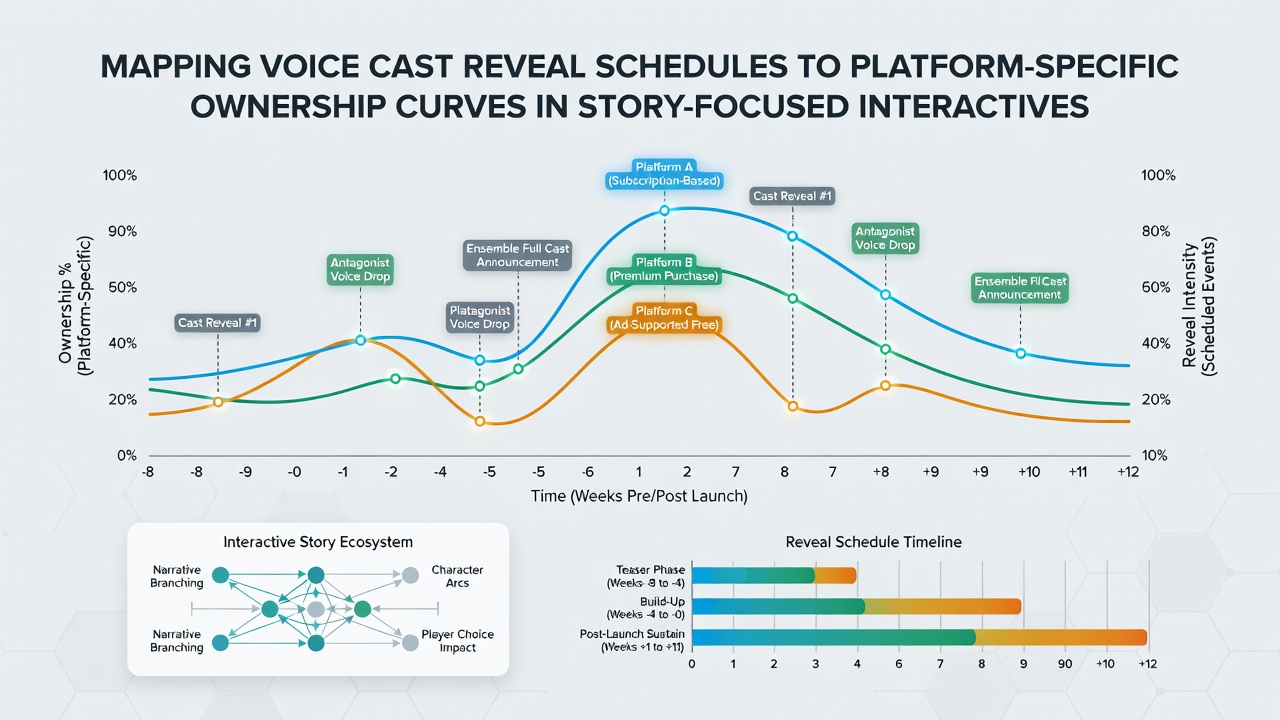
Interactive dramas with branching narratives and multiple protagonists benefit from staggered reveal schedules that introduce one actor at a time. Internal metrics shared by several development studios indicate this approach maintains interest across longer pre-launch periods and reduces the risk of a single announcement saturating audience attention. On Xbox platforms, such staggered reveals aligned with Game Pass trial periods produced measurable retention lifts once full ownership data became available, because new players encountered the cast gradually through promotional trials.
European market reports compiled by the European Games Developer Federation highlight similar platform variations across territories, noting that Scandinavian and German markets respond more strongly to console reveals while UK audiences show higher PC conversion rates following the same announcements. These regional differences appear consistent across multiple franchise entries rather than isolated to single titles.
Data collection methods and variables
Ownership curve mapping requires aligning announcement dates from official social channels and press releases with daily sales telemetry obtained through platform APIs and third-party aggregators. Variables tracked include reveal format (video trailer versus social post), cast member prominence, and concurrent marketing activities such as demo releases. Studies from institutions including the Swinburne University of Technology games research group have applied time-series analysis to isolate the contribution of voice cast news from other promotional factors.
Results consistently show that reveals featuring returning actors from prior entries generate steeper initial slopes on all platforms, while new cast announcements produce broader but shallower curves that extend further into post-launch periods. The distinction matters most for multi-platform strategies where developers seek to balance day-one sales against long-tail ownership growth.
Conclusion
Platform-specific ownership patterns in story-focused interactive dramas demonstrate measurable responses to voice cast reveal timing, with Steam curves rising faster and console trajectories showing greater duration. Continued monitoring through 2026 and beyond will clarify whether these relationships evolve alongside changes in platform discovery algorithms and community engagement tools.