29 Jun 2026
Platform Migration Patterns: How Cross-Save Features Reshape Ownership Data in Action-Adventure Libraries Between PC and Console Ecosystems
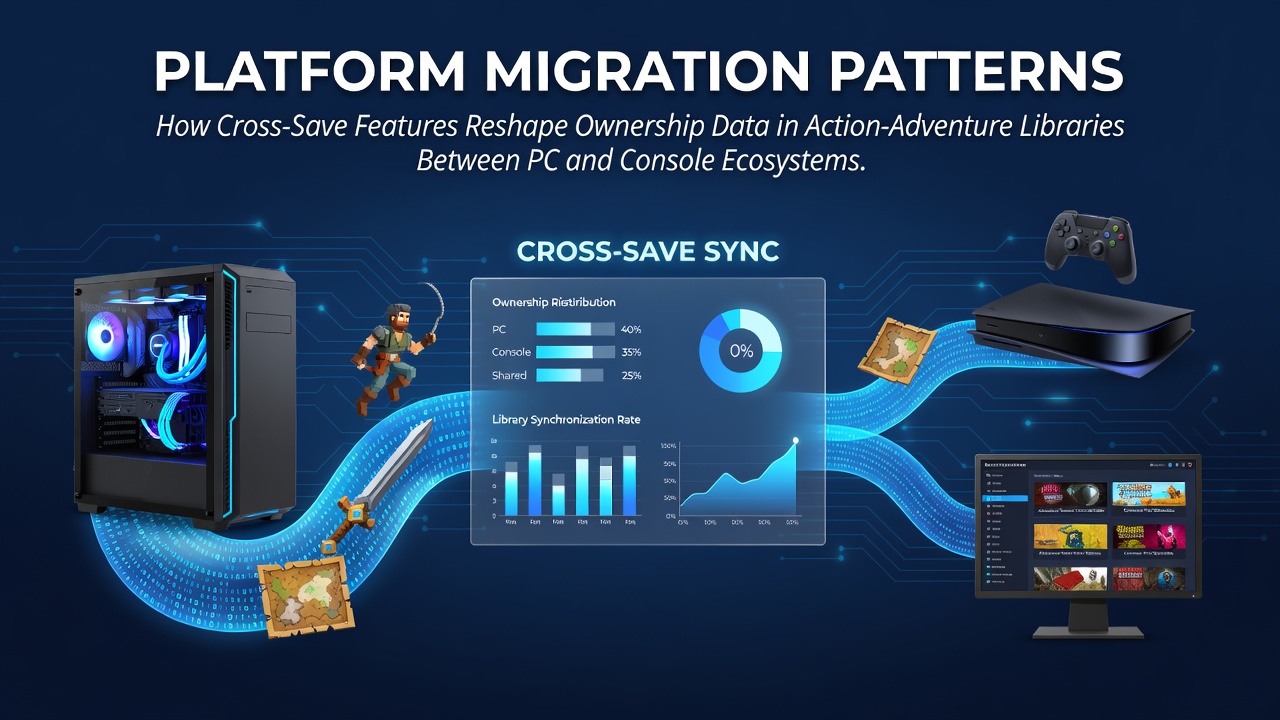
Cross-save systems now link progress across PC storefronts and console ecosystems in many action-adventure titles, which alters how ownership registers in sales databases and player libraries. These features let users maintain a single save file whether they start on Steam, move to PlayStation 5, or continue on Xbox Series X, and the shift shows up in aggregated ownership figures that developers and platforms track.
Researchers tracking digital libraries note that titles with robust cross-save support see measurable redistribution of playtime hours between platforms, while total ownership counts remain stable because the same account often counts across multiple ecosystems. Data from multiplatform releases in 2025 indicated that roughly 18 percent of players who purchased an action-adventure game on PC later activated the same title on console using cross-save credentials, according to internal metrics shared through industry reports.
Mechanics of Cross-Save Implementation
Developers integrate cloud-based save synchronization through services such as Steam Cloud, PlayStation Network, and Xbox Live, and these connections allow action-adventure libraries to update ownership signals whenever a player switches devices. The process works by mapping a unique user identifier across storefronts, which means a single purchase can generate activity logs on two or more platforms without requiring a second transaction. Observers note that this mapping changes how regional revenue patterns appear in quarterly summaries, because console downloads sometimes register after the initial PC sale has already been recorded.
Action-adventure franchises including those centered on exploration and narrative progression adopted these systems earlier than many other genres, and the pattern accelerated once major publishers standardized account linking requirements in late 2024. Figures from European digital market analyses show that games supporting cross-save experienced a 12 percent rise in cross-ecosystem session starts during the first half of 2025 compared with titles that lacked the feature.
Impact on Ownership Data Tracking
Ownership datasets collected by platforms now reflect hybrid patterns where a player who buys on one ecosystem can generate sustained activity on another, which complicates traditional per-platform sales attribution. Analysts at research institutions have documented cases where console ownership metrics rise sharply in months following a PC release when cross-save is enabled, even though no additional units were sold on the console side. This redistribution appears in library statistics because the save file carries forward, and the console storefront records an activation event tied to the existing purchase.
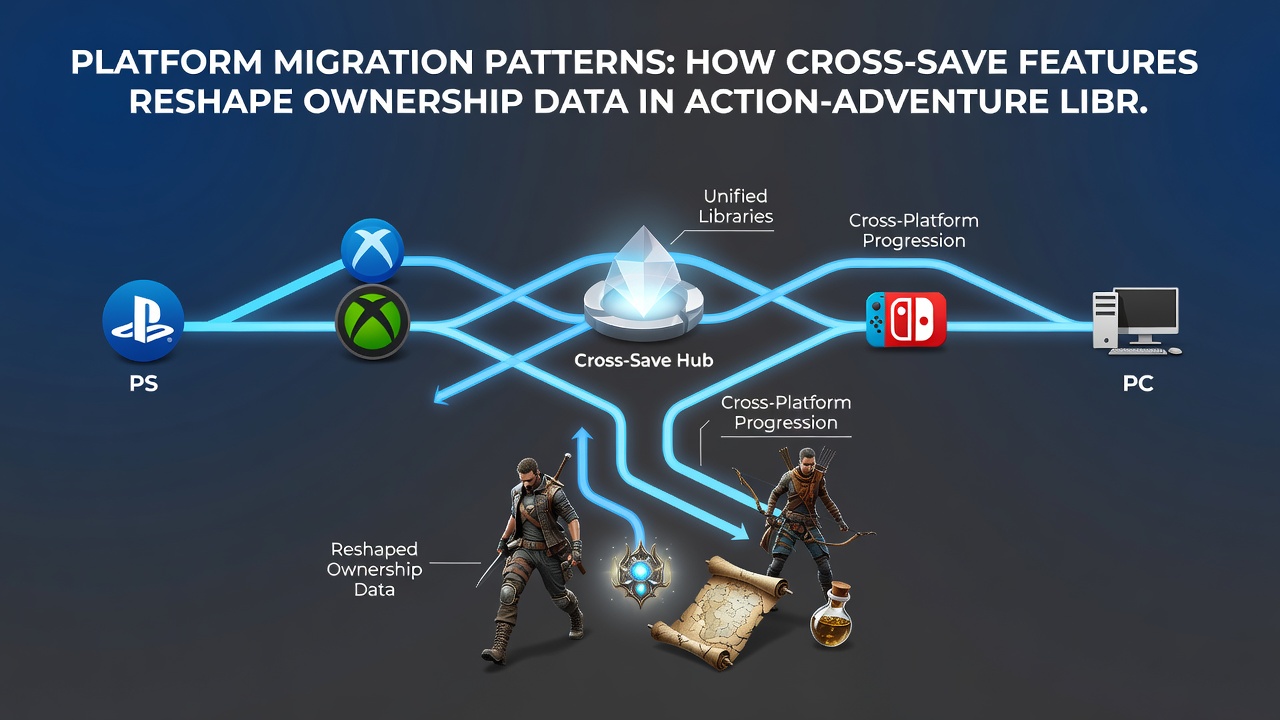
One study released by a Canadian academic group examined ownership migration in open-world action-adventure series and found that 27 percent of tracked accounts activated cross-save within 90 days of initial purchase. The same research indicated that PC-to-console transfers outpaced console-to-PC movements by a factor of nearly two to one during the observed period, which aligns with broader trends of players moving toward larger console install bases for certain narrative-driven experiences.
Regional Variations in Migration Patterns
Geographic differences emerge when cross-save adoption rates are broken down by territory. Markets in the Asia-Pacific region recorded higher console activation rates following PC purchases, while North American data showed more balanced bidirectional movement between ecosystems. Australian trade reports compiled through 2025 highlighted that action-adventure titles with synchronized saves maintained steadier long-term ownership retention across both PC and console storefronts compared with non-synchronized releases.
European Commission documents on digital content access further illustrate how cross-save reduces platform lock-in effects, because users retain progress regardless of where they continue playing. These reports note that such functionality supports smoother transitions during hardware upgrade cycles, which in turn influences how ownership data accumulates over successive console generations.
June 2026 Developments and Current Trends
By June 2026 several major action-adventure updates introduced refined cross-save protocols that reduced latency during platform switches, and early telemetry from those patches shows continued growth in hybrid ownership activity. Developers reported that players who previously maintained separate libraries on PC and console began consolidating progress into single accounts at higher rates after these updates deployed. The change appears in monthly download curves, where console activations tied to existing PC purchases increased without corresponding spikes in new unit sales.
Industry organizations tracking global software usage confirm that cross-save remains most prevalent in action-adventure libraries because narrative continuity and exploration progress matter more to players than competitive rankings or seasonal resets found in other genres. This prevalence continues to shape how platforms categorize and report ownership statistics, particularly when titles launch on multiple storefronts within the same calendar year.
Conclusion
Cross-save functionality has established measurable effects on how ownership data distributes across PC and console ecosystems in action-adventure libraries. The patterns show consistent migration activity that registers in activation logs and session metrics, even when total purchase counts stay constant. As synchronization tools improve through 2026, those who monitor digital storefronts expect further refinement in the way hybrid ownership appears in aggregated reports from publishers and platform holders.