6 Aug 2026
Seasonal Event Cycles and Their Connection to Playtime Increases in Simulation Titles on Portable Systems
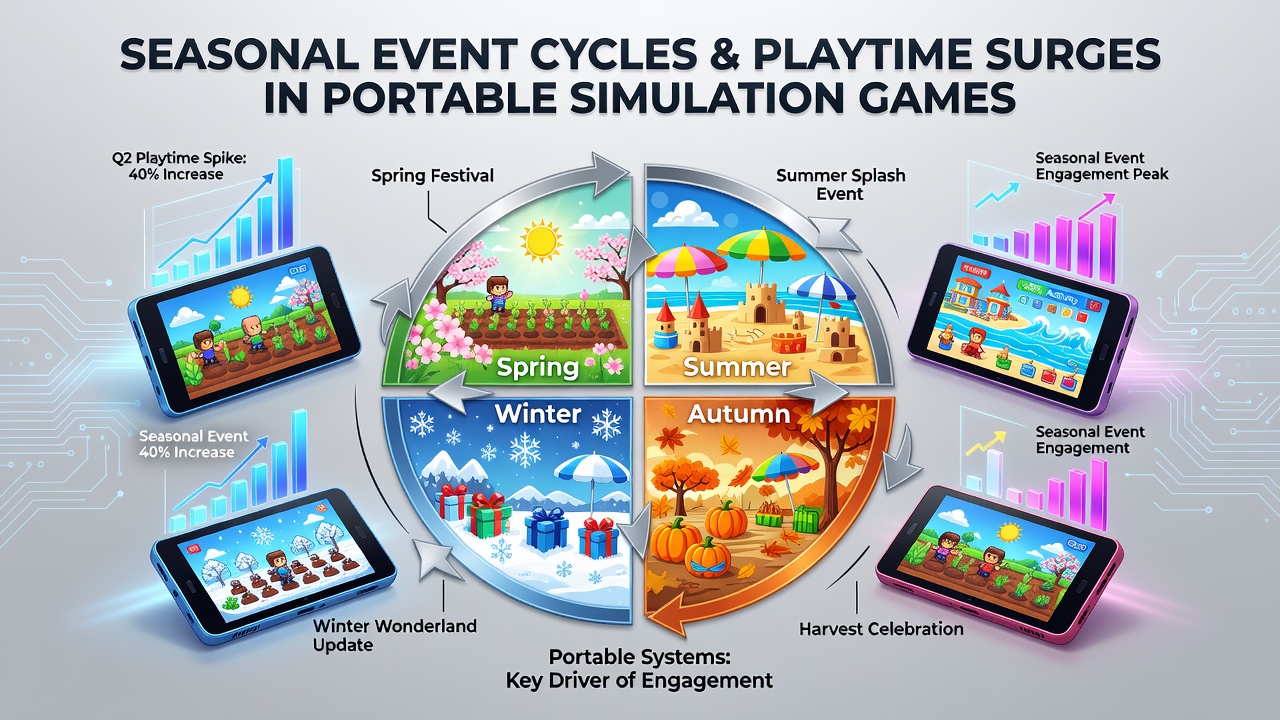
Seasonal event cycles in simulation titles on portable systems have shown measurable connections to extended playtime across multiple platforms and regions, with data from industry tracking services indicating consistent spikes during real-world holidays and calendar shifts. Researchers tracking user sessions on devices like the Nintendo Switch and similar handhelds note that events tied to summer festivals, harvest periods, or back-to-school transitions often align with higher daily engagement hours, particularly when those events appear in farming simulators, life management games, and community-building experiences. Figures from 2025 and early 2026 reveal that portable hardware enables these increases because players carry the devices during travel, breaks, and variable schedules, turning brief moments into longer sessions when limited-time content becomes available.
Patterns in Event Timing and Session Lengths
Data compiled across several simulation franchises shows that events built around autumn harvests or winter celebrations tend to extend average play sessions by incorporating limited rewards, new character interactions, and time-sensitive objectives that encourage repeated logins. Portable systems amplify this effect since their design supports quick access without requiring a dedicated setup, allowing users to check progress during commutes or evenings when stationary consoles might see less use. Industry reports from organizations such as the Entertainment Software Association indicate that simulation genres on handhelds experience these upticks more noticeably than other categories because core loops already revolve around routine and progression that seasonal additions naturally enhance.
August 2026 provides a recent example where summer-themed updates in multiple portable simulation releases coincided with reported rises in total play hours, especially among users in regions experiencing school breaks or vacation periods. Tracking services documented that titles featuring beach activities, crop rotations, or community gatherings saw session durations increase when these features overlapped with real calendar changes, and the handheld format allowed continuation across different environments throughout the day.
Regional Variations and Hardware Factors
Studies from academic and trade sources across North America, Europe, and Asia-Pacific regions highlight differences in how seasonal cycles influence portable playtime, with variations linked to local holidays and weather patterns that affect daily routines. For instance, European data from the Interactive Software Federation of Europe connects increased engagement in life simulation games to events timed with regional festivals, while portable hardware supports continued participation during travel between locations. Observers examining handheld metrics note that battery life, screen size, and offline functionality further support these patterns by removing barriers that might interrupt longer sessions on other devices.
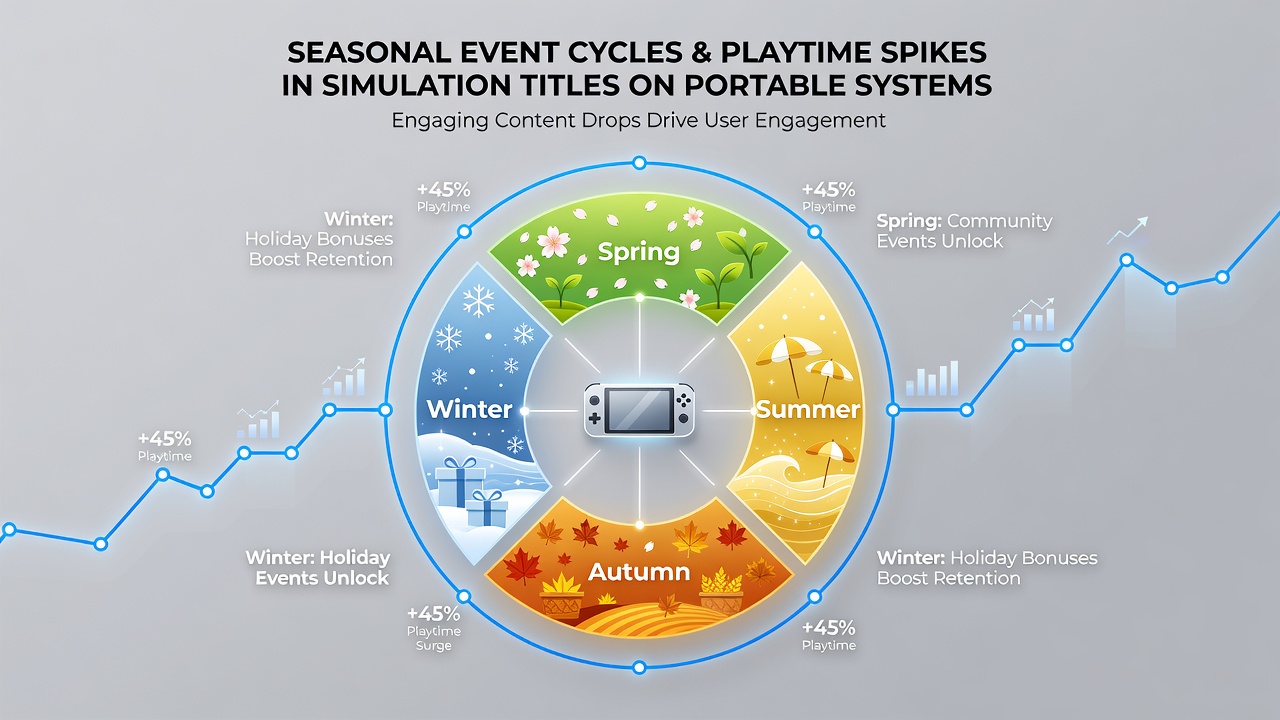
Simulation titles often integrate recurring annual events that mirror real seasons, creating predictable cycles where players return for new items, story expansions, or social features available only during specific windows. Portable platforms benefit from this structure because they allow seamless integration into varied daily schedules, with analytics showing higher retention when events span multiple weeks and include cross-save options between home and mobile play. Those examining session logs across 2024 through mid-2026 found that games emphasizing customization and collection see the strongest alignment between event launches and sustained playtime growth on handheld systems.
Measurement Approaches and Supporting Data
Analytics platforms record playtime through aggregated user reports and platform telemetry, revealing that seasonal content in simulation experiences on portables frequently produces secondary effects such as increased social sharing or community participation that further extend individual engagement. Researchers comparing portable versus home console data observe that the mobility factor contributes to more fragmented yet cumulatively longer sessions during event periods, especially when updates coincide with school holidays or public observances. Evidence from multiple tracking periods suggests these patterns hold across different simulation subgenres, from agricultural management to urban planning titles, as long as the seasonal mechanics reward consistent attention.
Portable systems also facilitate play during transitional times of day or year that stationary setups rarely capture, turning seasonal events into anchors for repeated interaction. Data sets covering late summer and early autumn periods demonstrate that titles with weather-linked mechanics or holiday-specific modes register measurable upticks when those features activate, and the lightweight nature of handhelds supports this without requiring users to rearrange their environments.
Conclusion
Seasonal event cycles maintain a documented relationship with playtime increases in simulation titles on portable systems through timing, content design, and hardware accessibility that together support extended engagement across varied user schedules. Reports from 2025 into August 2026 continue to illustrate these alignments in multiple regions and device categories, underscoring how limited-time features intersect with the practical advantages of handheld play to shape session patterns. Continued monitoring of telemetry and regional trends provides ongoing insight into these dynamics without reliance on single-platform observations.