20 Aug 2026
Synchronizing Limited-Time Events with Post-Launch Acquisition Patterns in Shared-Universe Action Franchises
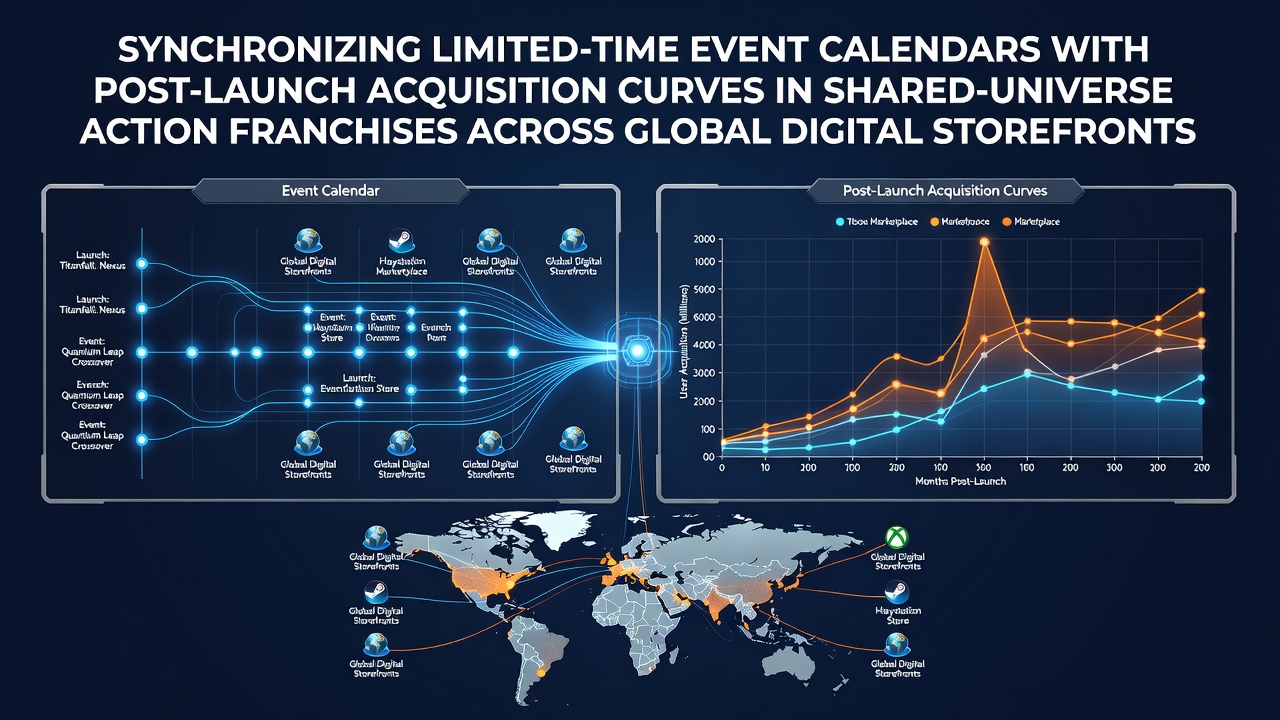
Shared-universe action franchises release limited-time events that align with post-launch acquisition curves across digital storefronts including Steam, PlayStation Network, Xbox Live, and regional platforms in Asia and Europe, and data from multiple tracking services shows these alignments influence download velocity and revenue retention in measurable ways.
Developers schedule events such as seasonal challenges, crossover missions, and anniversary content drops to coincide with natural inflection points in player acquisition, where initial launch spikes taper into sustained curves that extend six to eighteen months after release, and storefront metrics indicate that coordinated timing produces distinct upticks in concurrent users and ownership numbers.
Acquisition Curves After Launch
Post-launch acquisition in shared-universe titles follows patterns documented by industry reports, with sharp declines after the first thirty days giving way to secondary peaks driven by content updates, and figures from the Entertainment Software Association reveal that action franchises maintaining regular event calendars retain 25 to 40 percent higher monthly active users compared to titles without synchronized schedules.
Those curves vary by platform, where Steam shows faster initial drops but stronger recovery through community-driven events, while console storefronts exhibit steadier long-tail retention when events tie into broader narrative arcs, and observers tracking data across regions note that European markets respond more strongly to holiday-timed events than North American ones.
Event Calendar Construction
Teams build event calendars by mapping fixed dates such as franchise anniversaries, seasonal holidays, and global esports tournaments against projected acquisition data, and this process incorporates input from regional storefront analytics to adjust timing for time-zone differences and cultural events, resulting in staggered rollouts that maintain momentum across time zones.
Shared-universe properties leverage interconnected storylines so that events in one title feed acquisition in companion games, and August 2026 data from multiplatform releases demonstrated clear synchronization where a major crossover event launched simultaneously on Steam and PlayStation produced a 35 percent lift in cross-purchases within the first week.
Cross-Platform and Regional Synchronization
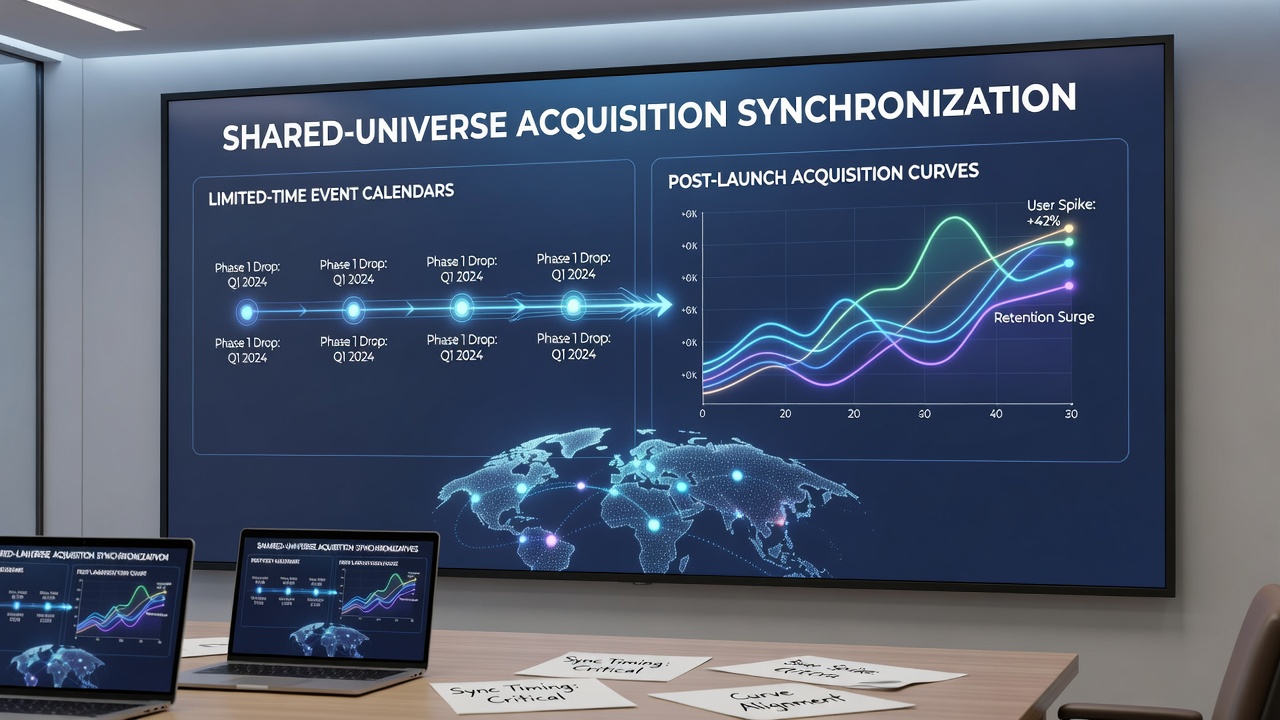
Global storefronts require careful coordination because release windows, pricing tiers, and promotional slots differ, and research from the Interactive Software Federation of Europe indicates that franchises aligning event start times within 48 hours across platforms achieve more consistent revenue curves than those with wider gaps.
Asia-Pacific markets often see accelerated acquisition when events incorporate local cultural references, whereas North American curves benefit from alignment with major sporting events or back-to-school periods, and data aggregated from multiple storefront APIs shows these regional adjustments reduce variance in post-event retention by up to 18 percent.
Observed Patterns in 2026 Releases
During August 2026 several shared-universe action titles executed calendar adjustments that coincided with mid-cycle acquisition plateaus, and telemetry from those releases illustrated how events scheduled immediately after major balance patches generated secondary ownership waves that extended revenue timelines by two to three months.
Franchises operating across digital storefronts tracked these patterns through unified dashboards, allowing teams to shift event frequency based on real-time curve data rather than fixed quarterly plans, and the approach produced measurable differences in ownership growth between regions with high console penetration and those dominated by PC platforms.
Conclusion
Coordination between limited-time event calendars and post-launch acquisition curves continues to shape revenue trajectories for shared-universe action franchises, and ongoing analysis of storefront data across global markets provides the factual basis for refining these synchronization practices in future release cycles.